Running After 40: It's Different. Not Worse.
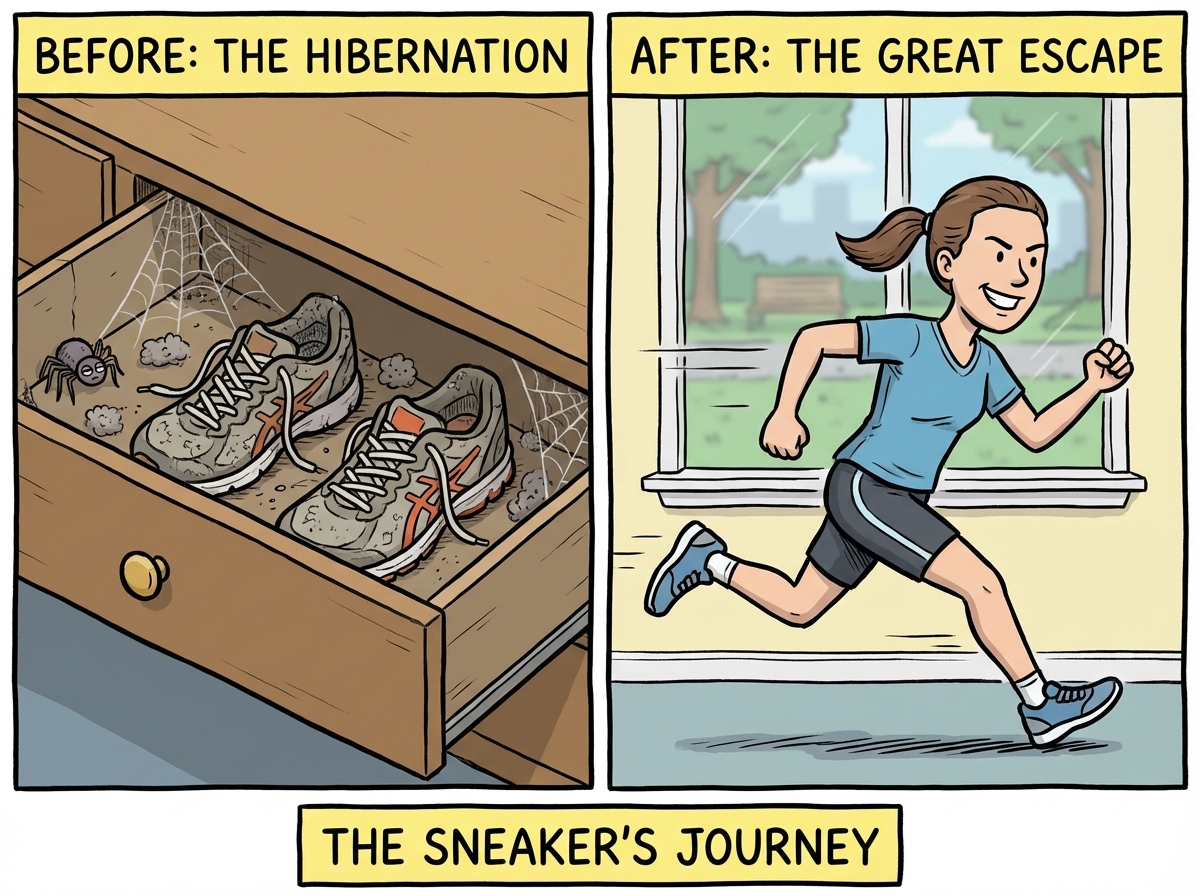
Somewhere in your house, there's a drawer with running shoes that were purchased with the best intentions and worn three times. Let's change that.
Free to start • No credit card required
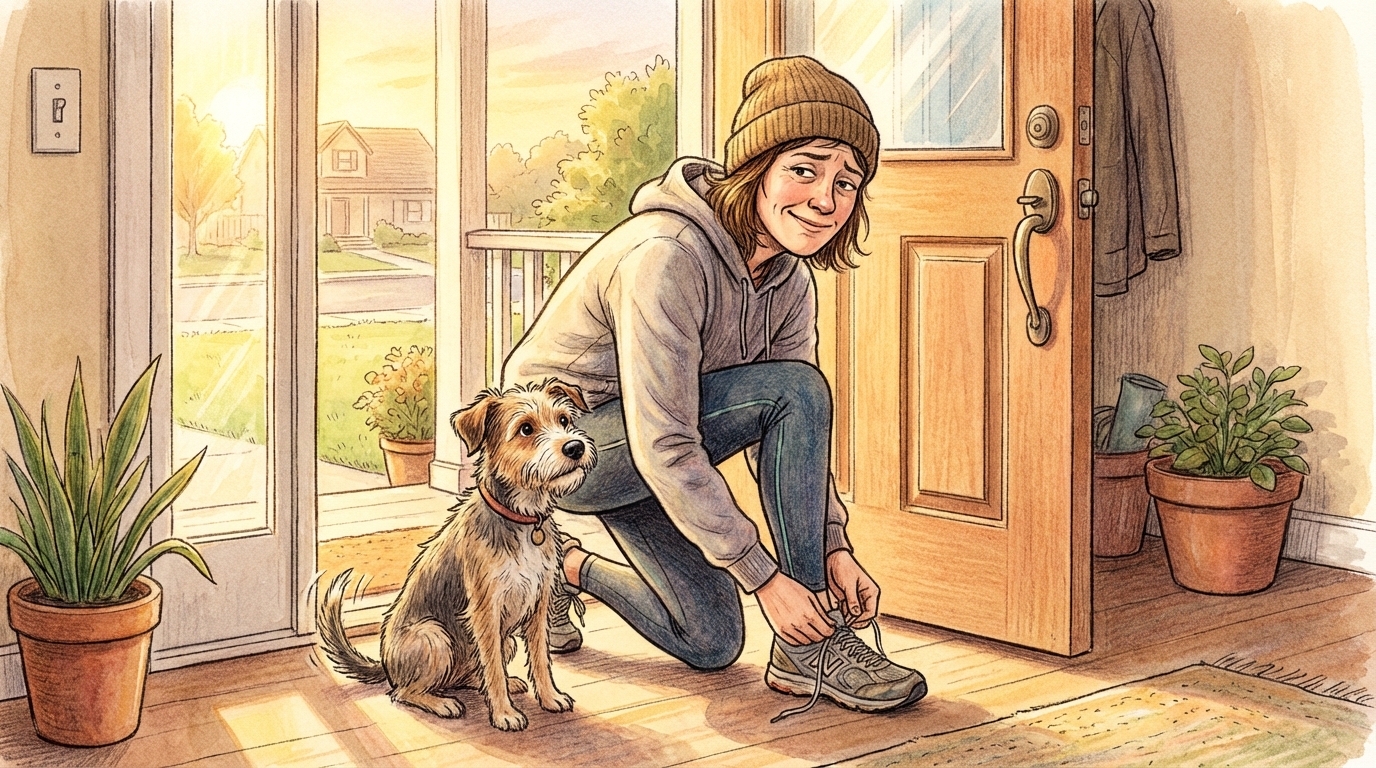
I have a theory. Somewhere in every person's house, there's a drawer. And in that drawer, there's a pair of running shoes that were purchased with the very best intentions, worn three times, and then abandoned because everything hurt and nothing was fun.
The thing is, starting to run after forty isn't like starting to run at twenty. At twenty, you could stay up until 3am drinking things that were on fire, sleep for four hours, and still run a passable 10K the next morning. At forty, you look at a flight of stairs and your knees make a noise like someone stepping on a bag of crisps.
But here's the surprising bit: running after forty can actually be better than running at twenty. You've got patience. You've got perspective. You've stopped caring what you look like in Lycra. And crucially, you've finally accepted that the goal isn't to be fast, it's to still be doing this in thirty years' time.
How Your Body Changes (And Why It's Not All Bad News)
These changes don't mean you can't run. They just mean you need to run smarter.
Metabolism Slows
You can no longer eat a pizza without consequences. But this doesn't stop you running — it just means running smarter.
Muscle Mass Decreases
Unless you do something about it. Running, combined with some basic strength work, keeps you strong.
Recovery Takes Longer
This isn't defeatism, it's physiology. Your muscles don't repair as quickly, and pretending otherwise leads to injury.
Joints Demand Respect
Your body wants a proper warm-up. It insists on recovery days. It requires actual stretching instead of just thinking about it.
Why Generic Training Plans Don't Work at 40
Here's what happens when you download a free training plan from the internet. It tells you to run three times a week, increasing your distance by ten percent each week until you can do a half marathon. Simple.
Except it's not simple, is it? Because on week four, your Achilles tendon starts complaining. And the plan has no idea that you've also got a stressful job, two children who need driving places, and a recurring issue with your lower back that flares up when it rains.
Generic plans treat every person like they're the same person. And they're not.
The Flikness Approach to Running After 40
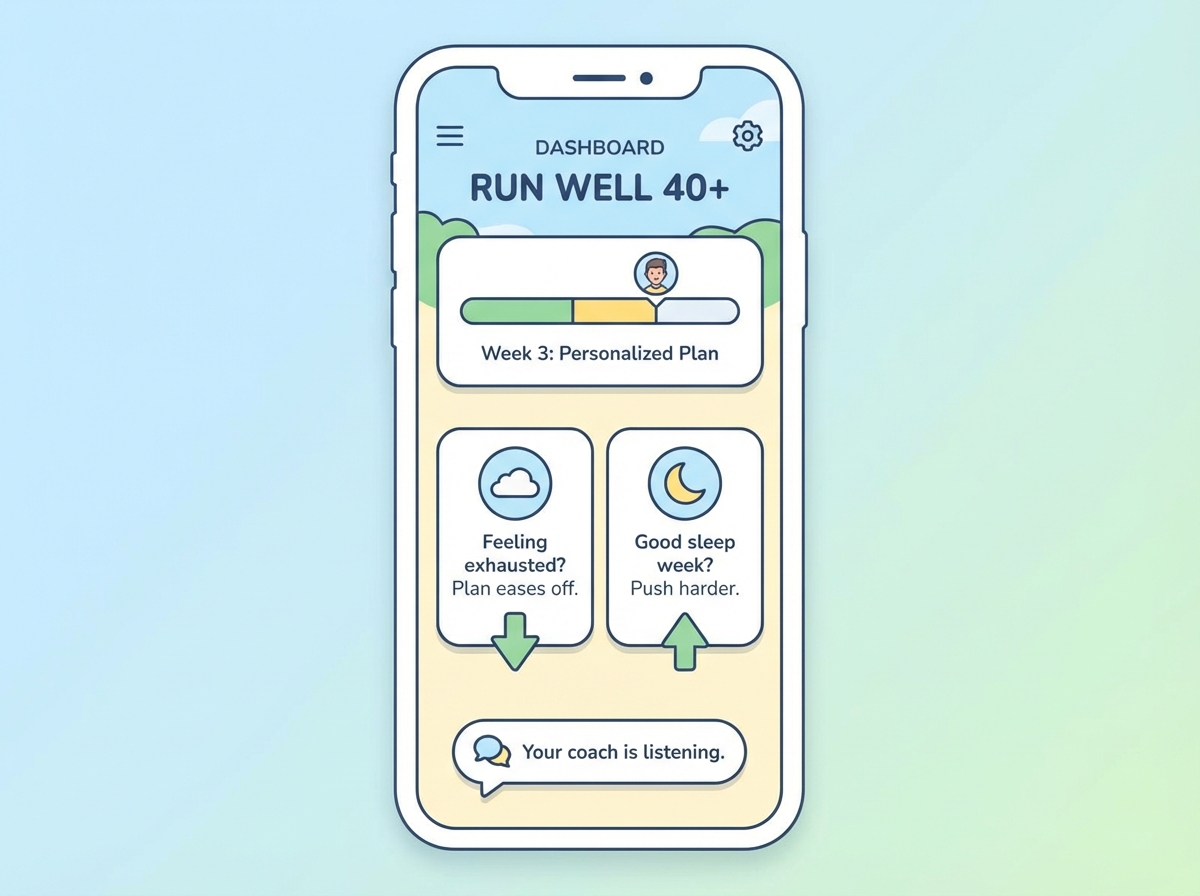
Flikness works differently. When you sign up, you create a profile that actually captures who you are. Your age. Your fitness level. Any health issues. Your schedule. Your goals. All the things that make the difference between a plan that works and a plan that sends you back to the sofa by week three.
Then it creates a training plan specifically for you.
- Feeling exhausted because work has been brutal? The plan eases off
- Feeling brilliant because you've had a week of good sleep? It pushes you harder
- Like having a coach who actually pays attention
- Doesn't cost a fortune or make you feel inadequate
The Benefits Nobody Mentions
The biggest benefits of running after forty aren't physical. They're mental.
Mental Clarity
Running gives you something that's genuinely yours. An hour where nobody needs anything from you.
Better Sleep
Regular running improves sleep quality significantly. You'll wake up feeling more rested.
Stress Relief
It's meditation for people who can't sit still, therapy for people who don't want to talk about their feelings.
Sustainable Fitness
You've stopped caring what you look like in Lycra. The goal isn't to be fast, it's to still be doing this in thirty years.
The Real Prize
When you're in your forties, life gets complicated. You've got responsibilities. You've got worries. You've got that thing at 3am where you suddenly remember something embarrassing you said in 2007.
Running gives you something that's genuinely yours. A time when your only job is to put one foot in front of the other.
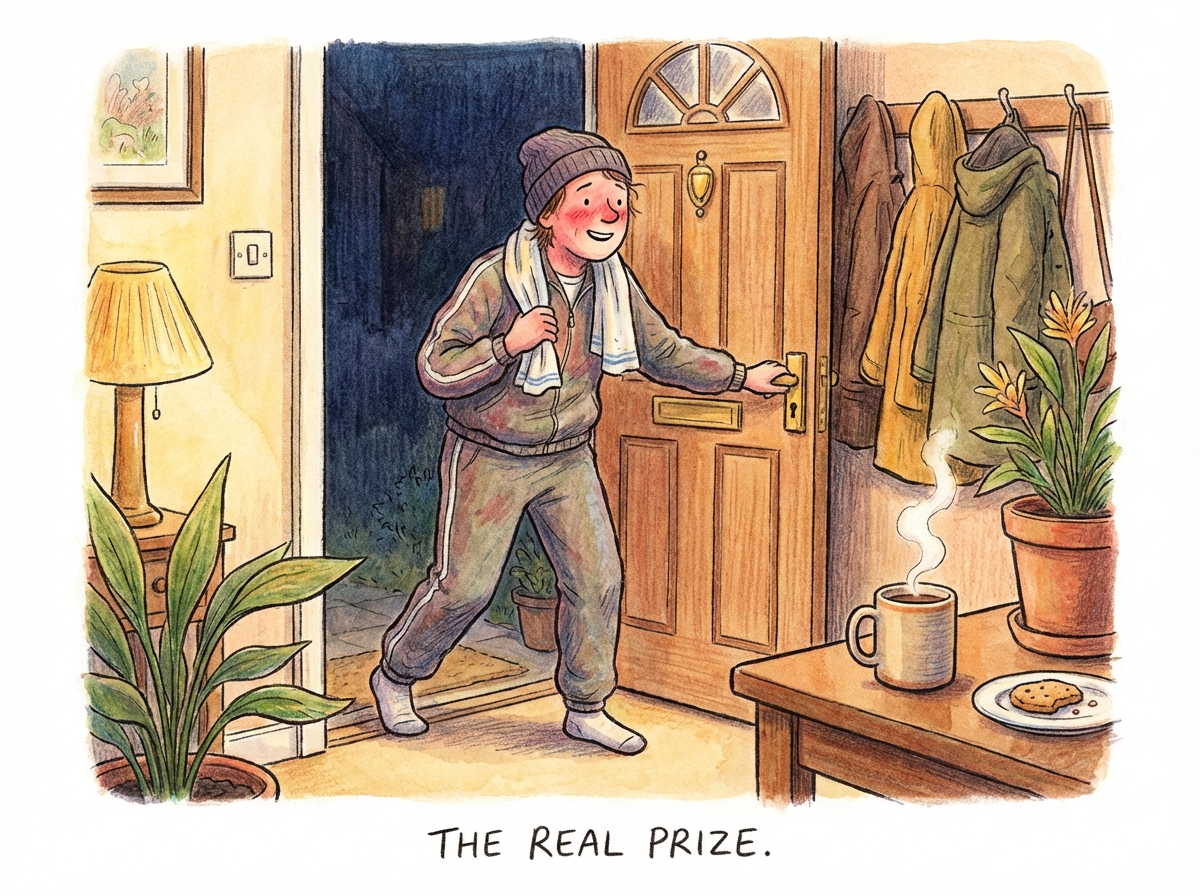
And yes, you'll also get fitter. You'll probably lose some weight. You'll definitely sleep better. But the real prize is that feeling of walking back through your front door, slightly sweaty and thoroughly pleased with yourself.
Ready to Start Running?
Look, I'm not going to pretend this is easy. Starting anything new at forty is harder than starting it at twenty, because you know exactly how many ways it could go wrong. But here's the truth: the only way it definitely goes wrong is if you never start at all.
Free to start • The worst that can happen is you actually start running again